

Blog
Ivermectin 12 mg: Uses, Safety, Therapy Guide

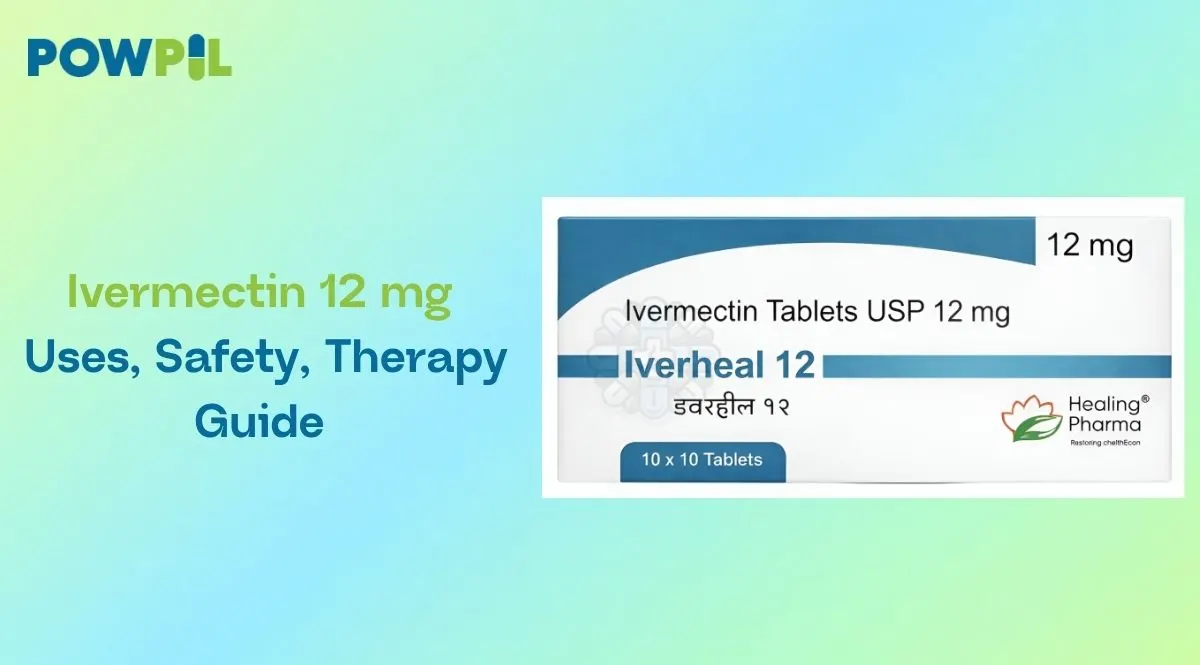
Ivermectin 12 mg, an antiparasitic medication, has been in use in the medical fraternity since the 1980s. It is a member of the macrocyclic lactone class. Initially, the compound was derived from a group of compounds used in the field of veterinary medicine.
Over the years, several other uses of ivermectin have also been developed. Today, it is used for the treatment of a number of parasitic infections. Furthermore, some formulations of ivermectin are also used to treat conditions like head lice. Other formulations of the drug are used to treat conditions like rosacea. However, the use of ivermectin for the conditions stated above should not be regarded as an endorsed/approved use of the drug.
What Is Ivermectin 12 mg?
Ivermectin is a drug that is used to treat certain parasitic infections in humans, including some types of mites and lice.
Ivermectin is available in numerous formulations. Oral ivermectin is used to treat infections caused by parasites, while formulations for skin conditions and parasitic infections are of topical nature. In the United States, oral ivermectin is approved to treat onchocerciasis and strongyloidiasis, while several topical formulations are approved to treat head lice and rosacea.
How Is Ivermectin 12 mg Used in Therapy?
Ivermectin is used to treat several different parasitic infections, including onchocerciasis and strongyloidiasis. In onchocerciasis, ivermectin helps to kill larval worms to help prevent further infection and infection-related complications.
Ivermectin is also used for the treatment and prevention of strongyloidiasis. Ivermectin is listed by the CDC to be the drug of choice for the treatment of strongyloidiasis.
There are other possible uses for ivermectin in certain cases of scabies and/or lice. These uses may be considered off-label and require medical oversight.
How Does Ivermectin Work?
Ivermectin 12 mg binds to glutamate-gated chloride channels of parasitic nematodes and insects. This causes an influx of chloride ions and hyperpolarizes the membrane. This leads to paralysis and ultimately death of the parasite.
Ivermectin has a very low potential for toxicity in humans. This is attributed to a thick and strong blood brain barrier and the presence of P-glycoprotein transmembrane transport system in humans. Ivermectin has a very low capacity to distribute to the central nervous system.
Ivermectin for Internal and External Parasites
Ivermectin 12 mg is one of the few parasiticides that are effective against both, internal and external parasites.
For treatment of internal parasites, the drug is given orally. On the other hand, for treatment of external parasites, topical forms of the drug are used.
Ivermectin 0.5% lotion is approved by the FDA for the treatment of head lice. For the treatment of scabies, the use of oral ivermectin is off-label and is done under medical supervision.
According to the CDC, one dose of oral ivermectin is not adequate to treat scabies, as it only affects the scabies mites and does not affect the eggs.
What Are the Benefits of Ivermectin?
- Ivermectin 12 mg is unique because it affects various parasitic infections and is available in both, oral and topical forms. Further, it has a long-standing record of safety and tolerability in human medicine.
- It can be used to treat infections based on the patient’s weight.
- It has been used to eliminate infections based on mass treatment.
- It has been used to treat infections caused by the parasitic roundworm, Onchocerca volvulus, and is used to control skin and eye irritations caused by the parasite.
Side Effects of Ivermectin 12 mg
It is generally well-tolerated, but some side effects include:
- Dizziness
- Nausea
- Vomiting
- Diarrhea
- Stomach Pain
- Rash
During the treatment of parasitic infections, some side effects may be caused by the person’s immune system responding to the dying parasite, instead of the drug causing the side effects.
The FDA reports that consuming high doses of ivermectin 12 mg may cause nausea, vomiting, diarrhea, and other, more serious, conditions.
Who Should Be Careful with Ivermectin?
Children less than 15 kg should not take ivermectin. It should only be prescribed to them by a healthcare practitioner.
There are limited data on the effects of ivermectin on pregnant women, so health care professionals may need to exercise caution when prescribing it to them. The CDC suggests that pregnant women consult their health care professional, to help them make the best decision regarding their treatment.
People with poor liver function and those taking medications that may interact with ivermectin, should consult with a health care professional before using ivermectin.
Ivermectin 12 mg and Food or Alcohol
Because ivermectin should be prescribed only for certain uses, the way it is taken may vary. It should be taken according to the instructions given by a health care professional or pharmacist.
Alcohol can amplify the effects of ivermectin on the central nervous system, and increase the risk of dizziness. Talk to your doctor about ivermectin and your alcohol use.
Ivermectin and Compounded Formulations
When a ready-to-use version of a medication is not available, a pharmacist may prepare a medication to meet an individual patient’s needs (i.e. compound a medication).
However, compounded ivermectin does not have assurances of safety or efficacy like those of an FDA-approved drug. Compounded ivermectin should only be used when other options are not available, under the supervision of a licensed practitioner.
The public should also not use ivermectin products that are manufactured for animals. Products made for animal use may contain different, unevaluated, and dangerous ingredients.
Research on Other Uses of Ivermectin
Ivermectin 12 mg is being studied for additional medical uses beyond those currently approved.
Although ivermectin has been researched for a variety of medical uses, it does not mean the medication is approved or even effective for those other uses.
The FDA has stated ivermectin is not approved for the prevention or treatment of COVID-19. Additionally, the FDA states that ivermectin does not have sufficient clinical evidence for the treatment of COVID-19.
Is Ivermectin Being Studied for Other Conditions?
Ivermectin 12 mg is an anti-parasitic medication. It is used to treat some worm and parasite infections. It is used to treat strongyloidiasis and onchocerciasis. It is also used to treat other parasitic infections. There are other uses of ivermectin being researched.
These uses include infections and inflammations caused by viruses. There are also research studies being conducted on using ivermectin to treat different types of cancers.
Until further clinical studies are conducted, these uses should not be considered established clinical practices.
Final Words
Ivermectin 12 mg is an important drug for the treatment and control of certain parasitic infections. It is US FDA approved for the treatment of onchocerciasis and some forms of lymphatic filariasis and other parasitic infections. It is also used for some forms of Strongyloidiasis.
While there are ongoing studies on the role of ivermectin in the treatment of cancers and viral infections, at this time, its use in these indications is not approved. For approved uses, it is imprtant that the correct formulation for humans is utilized and prescribed under the direction of a health care professional.